
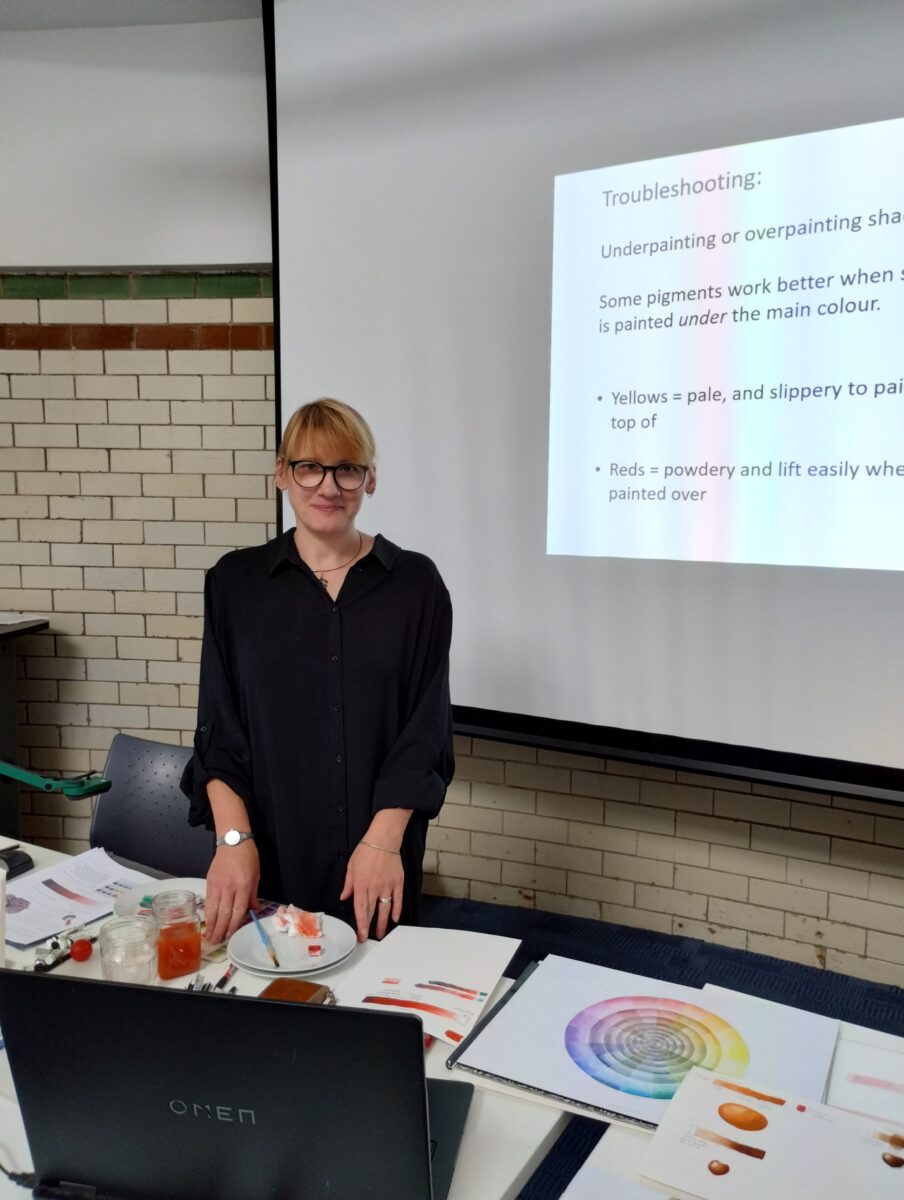
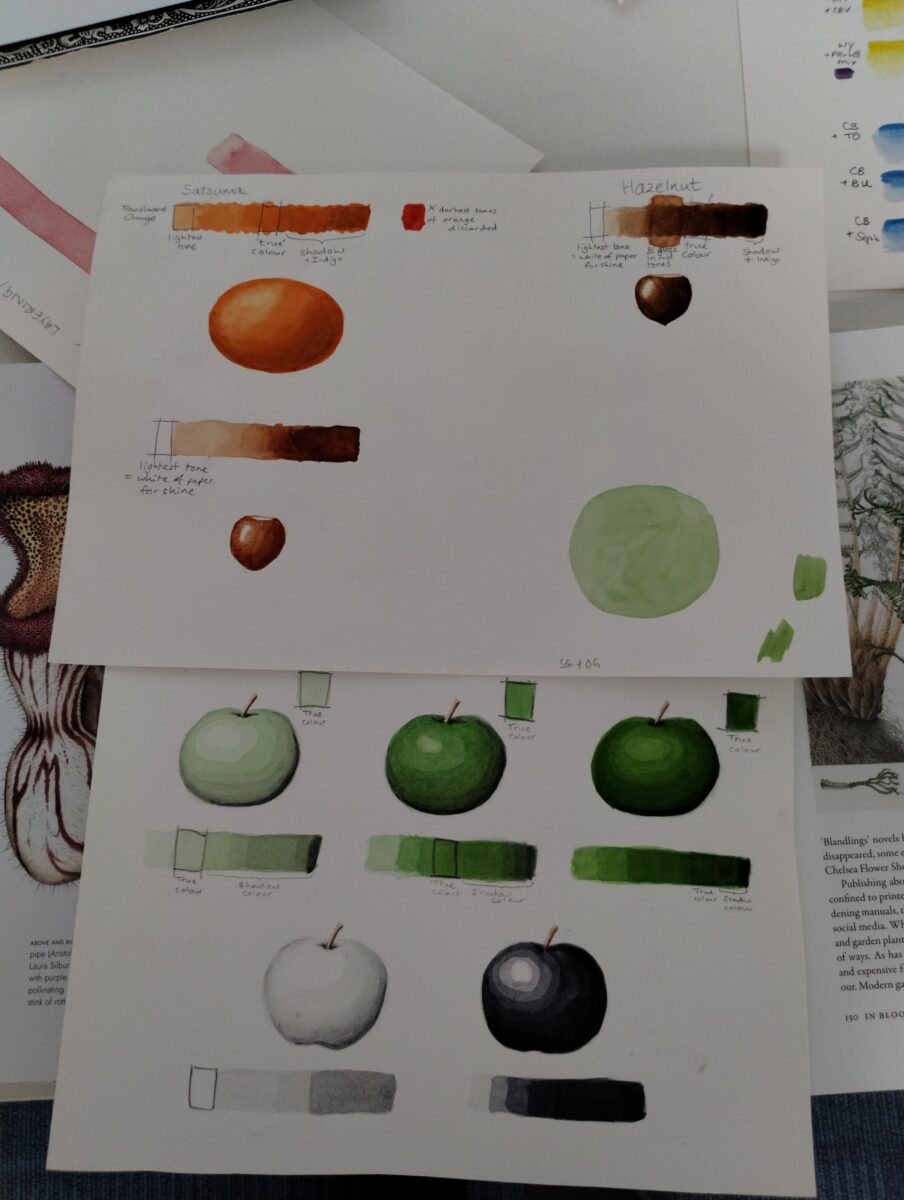
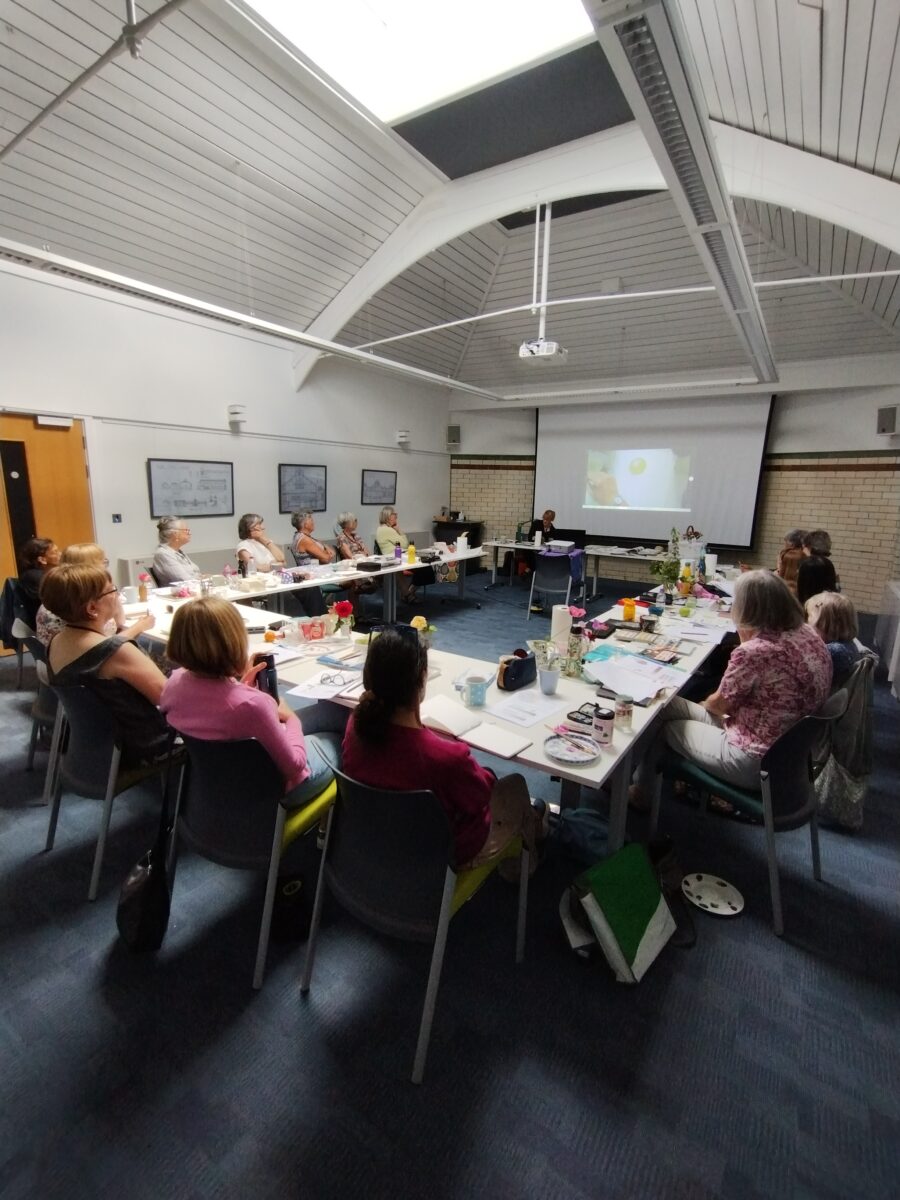
Everything we paint on a 2D surface needs shadow to create the optical illusion of a 3D image. Laura explained that shadows vary depending on the colour. Every object has a main colour plus lighter and darker tones. The first exercise involved adding Neutral Tint at various concentrations to each primary colour. This created a range of shadow colours. The exercise was then repeated, but the opposite colour on the colour wheel was added to create the shadow colours. ( e.g. Cobalt Blue plus Red/Orange) Profile strips were completed with a central primary colour. On the left, diluted to show a range of highlights, on the right, Neutral Tint or opposite colour in increasing concentrations to show a range of shadows. Profile strips were completed to match a selected round fruit, e.g., a green apple or a red tomato. The mixed paints were then used to create a 3D image of the chosen fruit.
The subject of shadows on a patterned subject, e.g., a watermelon, variegated leaves, was the next exercise.
Each colour needed its own profile strip to build a convincing 3D form. We also looked at how shadows behave on white, red, yellow, mid‑tones and pale colours, along with different techniques for applying them.
A very enjoyable and valuable workshop!
Carol Hardie